
We’ve all heard the phrase “mind over matter,” and we’ve all had moments when our mental powers were the only thing that got us to the end of a tough set. But in these desperate spots under a heavy bar, we have to ask: Was it really “mind over matter” that got us through – or something else?
Researchers wanted to find this out by looking at the effects of using attention span as a way to change the perceived difficulty of a workout. In other words, they wanted to see if changing the way that you use your attention span changes the levels of mental stress and perceived difficulty of a hard set, allowing for better performance and greater gains.
They found that although directing your attention outside of yourself is effective at increasing performance at low to moderate exercise intensities, it becomes less so as your body approaches its physical limits at greater intensity levels.
So here’s your FUSION FACTOID: The next time you’re about to load up a heavy bar and bust out a heavy set, take a realistic look at the situation and determine if you’re actually able to do the work, or if you’re just trying to convince yourself. To tell the difference, sit down for thirty seconds and close your eyes. If they spin or you feel burned out, your nervous system has reached its limit and no amount of mental trickery will get you safely through the set. The fact is, mental tricks work to get you in the gym and to get you momentum, but as you get more fatigued, they lose effectiveness. At this point, if you keep pushing yourself, you’ll get hurt. So know your limit, and bodybuild within it! Reject inappropriate mind-over-matter strategies. This will help keep you growing and prevent you from becoming an injury statistic.
www.fusionbodybuilding.com
Source: Lind E, Welch AS, Ekkekakis P. Do ‘mind over muscle’ strategies work? Examining the effects of attentional association and dissociation on exertional, affective and physiological responses to exercise. Sports Med. 2009;39(9):743-64.
Wednesday, February 24, 2010


Friday, February 19, 2010
Now that’s muscle memory.
Scientists have found the earliest evidence of animal muscle on 565 million-year-old rocks bearing the marks of animal locomotion. On Canada’s east coast, 150 kilometres south of St. John's, the fossilized trails of soft-bodied creatures predate modern animals by 30 million years. It’s suspected that even these earliest bodybuilders at one point had posters of Arnold on their bedroom walls.
Source: CBC News
Source: CBC News
Tuesday, February 16, 2010
Eating a medium pizza instead of an extra-large is not a diet
As bodybuilders, we know what it takes to diet down: dedication, eating clean and training hard. Of course, there are many different methods and styles of gettin’ it done. Just some examples include carb cycling vs. carb reduction, as well as no cardio vs. intervals vs. living on the treadmill. Though we debate over which is the “best” way, we can respect each other’s opinions.
But we have to draw the line somewhere, and I think I’ve found that line: the diet plan of Paul Mason, the fattest guy in the world. I recently came across this story in English tabloid The Sun
But we have to draw the line somewhere, and I think I’ve found that line: the diet plan of Paul Mason, the fattest guy in the world. I recently came across this story in English tabloid The Sun
The article begins with an intriguing lead: “The world’s fattest man is set to reveal his weight-LOSS tips – as he writes his autobiography.” But here’s the line that really gets me: “He used to gorge on 20,000 calories a day – EIGHT times what the average man eats.”
Sure, this guy lost 280 pounds and is down to a slim and trim 700. But at that weight, just walking to the washroom has to burn some serious calories. So what insights can he offer? Forgive me, Paul Mason, but I think I’ll be spending my time eating protein and sweating instead of reading your book.
Posing for Wii posers
There are hundreds of video games out there – some good, some bad – but a new game for the Wii makes you wonder what the heck they were thinking. It’s called Muscle March, and it’s a Japanese hole-in-the-wall game in which you control bodybuilders who have to hit the proper bodybuilding poses to make it through – you guessed it – holes in the wall.
Here’s the official blurb:
The official Muscle March™ is a quirky Japanese action game stuffed full of macho bodybuilders. The all mighty protein powder has been stolen so it’s up to Tony and his muscle-bound crew to catch the thieves. Choose from a variety of perfectly molded superstars and bring these terrible villains to justice. As each thief attempts his escape, he will smash through walls while making a variety of poses. You must match these poses to fit through the holes and catch up to the thieves. The protein powder will be yours again!
Now, you know I love my protein powder, but this game looks horrible. At least it gave me a laugh. Hope it gives you one too.
Tuesday, February 09, 2010
Get Enough?
Did you know that the amount of time you should rest between sets depends on your specific training goals? It’s true. A new study by researchers in Brazil makes it clear that, depending on your goal, you want to alter the rest times between sets.
Researchers wanted to analyze the effects of taking different amounts of rest time between sets as a way of trying to get a specific training outcome – i.e., muscle growth, strength gains or enhanced endurance.
The researchers split subjects into groups and had them do a workout. The results of the study show that in terms of acute responses, with training loads of 50 to 90 percent of one-rep max (1RM), a rest period of 3 to 5 minutes was best because it allowed for more repetitions over more sets. It was found that 3 to 5 minutes of rest between sets also increased greater absolute strength, which was a function of the increased intensity of the training. In terms of power, subjects who did multiple sets with 3 to 5 minutes in between sets had higher levels of muscle power over those sets than people who waited only one minute between sets. The researchers also found that if muscle growth is the goal, 30 to 60 seconds is the best rest period, as it keeps growth hormone (GH) levels higher, and that 20-second to one-minute rest periods are best for endurance during high-intensity endurance exercise.
So here’s your FUSION FACTOID: When designing a training program, factor in your intra-workout rest times and design them to give you the biggest bang for your buck – muscle growth, strength gains or enhanced endurance. By both working and resting for the same goal, you’ll be one step closer to taking your physique to the next level!
www.fusionbodybuilding.com
Source: de Salles BF, Simão R, Miranda F, Novaes Jda S, Lemos A, Willardson JM. Rest interval between sets in strength training. Sports Med. 2009;39(9):765-77.
Researchers wanted to analyze the effects of taking different amounts of rest time between sets as a way of trying to get a specific training outcome – i.e., muscle growth, strength gains or enhanced endurance.
The researchers split subjects into groups and had them do a workout. The results of the study show that in terms of acute responses, with training loads of 50 to 90 percent of one-rep max (1RM), a rest period of 3 to 5 minutes was best because it allowed for more repetitions over more sets. It was found that 3 to 5 minutes of rest between sets also increased greater absolute strength, which was a function of the increased intensity of the training. In terms of power, subjects who did multiple sets with 3 to 5 minutes in between sets had higher levels of muscle power over those sets than people who waited only one minute between sets. The researchers also found that if muscle growth is the goal, 30 to 60 seconds is the best rest period, as it keeps growth hormone (GH) levels higher, and that 20-second to one-minute rest periods are best for endurance during high-intensity endurance exercise.
So here’s your FUSION FACTOID: When designing a training program, factor in your intra-workout rest times and design them to give you the biggest bang for your buck – muscle growth, strength gains or enhanced endurance. By both working and resting for the same goal, you’ll be one step closer to taking your physique to the next level!
www.fusionbodybuilding.com
Source: de Salles BF, Simão R, Miranda F, Novaes Jda S, Lemos A, Willardson JM. Rest interval between sets in strength training. Sports Med. 2009;39(9):765-77.
Wednesday, February 03, 2010
Professional Physique...Professional Genetics?
For decades, professional bodybuilders have sworn by genetics as the factor most responsible for success. Others, however, have rightly noted that performance-enhancing drugs have substantially contributed to professional physique development in the past decades.
Still, genetics are the overriding regulator of size, density, hardness and other muscular qualities, even if you use steroids and other performance-enhancing products, including supplements. In fact, you could say that there’s been a shift in our understanding of the body. No longer are we in a simple macronutrient mode in which we simply feed the body a generalized diet or give it a single training method. We’re now in the era of genetics.
This was recently confirmed by the development of new genetic-testing kits that have hit the market, promising individualized “genetic supplementation.” Beware these! Although legitimate genetic testing is being done, nothing is yet available to consumers. The science simply isn’t that developed yet.
Recent research at the University of Sydney confirms that many interacting genes are involved in athletic performance, and that the presence of one single gene isn’t meaningful or predictive of present athletic performance or future performance expectations.
So here’s your FUSION FACTOID: Your genetics are important, but they’re not the only game in town. The bottom line, at least for now, is that the science isn’t yet sufficiently developed to offer meaningful and reliable home scientific genetic tests. In other words, if you’re thinking about getting a genetic test – especially if it’s online or through the mail – don’t. Save your money and buy some protein instead. Those genes will make good use of it!
www.fusionbodybuilding.com
Source: Trent RJ, Yu B. The future of genetic research in exercise science and sports medicine. Med Sport Sci. 2009;54:187-195. [Epub 2009 Aug 17]
Still, genetics are the overriding regulator of size, density, hardness and other muscular qualities, even if you use steroids and other performance-enhancing products, including supplements. In fact, you could say that there’s been a shift in our understanding of the body. No longer are we in a simple macronutrient mode in which we simply feed the body a generalized diet or give it a single training method. We’re now in the era of genetics.
This was recently confirmed by the development of new genetic-testing kits that have hit the market, promising individualized “genetic supplementation.” Beware these! Although legitimate genetic testing is being done, nothing is yet available to consumers. The science simply isn’t that developed yet.
Recent research at the University of Sydney confirms that many interacting genes are involved in athletic performance, and that the presence of one single gene isn’t meaningful or predictive of present athletic performance or future performance expectations.
So here’s your FUSION FACTOID: Your genetics are important, but they’re not the only game in town. The bottom line, at least for now, is that the science isn’t yet sufficiently developed to offer meaningful and reliable home scientific genetic tests. In other words, if you’re thinking about getting a genetic test – especially if it’s online or through the mail – don’t. Save your money and buy some protein instead. Those genes will make good use of it!
www.fusionbodybuilding.com
Source: Trent RJ, Yu B. The future of genetic research in exercise science and sports medicine. Med Sport Sci. 2009;54:187-195. [Epub 2009 Aug 17]
Wednesday, January 20, 2010
Workouts Hurt...Carbs Help.
You work hard to build muscle – lots of it. But with hard work comes the risk of getting sick and an increased vulnerability to infections of opportunity, such as upper respiratory tract and ear infections.
It’s well-known that drinking a carbohydrate drink after your workout is a great way to help offset the hard effects of training on the immune system. A new study by researchers from the University of South Carolina tested the effects of two specific carbohydrate types on markers of immune system strength. They found that glucose and oat beta-glucan reduced susceptibility to infection following stressful exercise.
So here’s your FUSION FACTOID: Exercise can make you sick, but carbs can fix what ails you. The key is to use the right kinds. Although sucrose and other refined sugars are used in sports drinks, the research shows that a solution of 50% oat beta-glucan and 6% sucrose is highly effective not only as a post-exercise carbohydrate source but also in strengthening your immune system. And this means you can train harder and longer without getting sick.
Source: EA Murphy, JM Davis, MD Carmichael, et al. Benefits of oat β-glucan and sucrose feedings on infection and macrophage antiviral resistance following exercise stress. Am J Physiol Regul Integr Comp Physiol. 2009 Aug 19;297:R1188-R1194.
It’s well-known that drinking a carbohydrate drink after your workout is a great way to help offset the hard effects of training on the immune system. A new study by researchers from the University of South Carolina tested the effects of two specific carbohydrate types on markers of immune system strength. They found that glucose and oat beta-glucan reduced susceptibility to infection following stressful exercise.
So here’s your FUSION FACTOID: Exercise can make you sick, but carbs can fix what ails you. The key is to use the right kinds. Although sucrose and other refined sugars are used in sports drinks, the research shows that a solution of 50% oat beta-glucan and 6% sucrose is highly effective not only as a post-exercise carbohydrate source but also in strengthening your immune system. And this means you can train harder and longer without getting sick.
Source: EA Murphy, JM Davis, MD Carmichael, et al. Benefits of oat β-glucan and sucrose feedings on infection and macrophage antiviral resistance following exercise stress. Am J Physiol Regul Integr Comp Physiol. 2009 Aug 19;297:R1188-R1194.
Tuesday, January 19, 2010
Monday, January 18, 2010
Ironically, the Islamic Solidarity Games are cancelled because of disagreement.
It was announced today that the Islamic Solidarity Games have been officially cancelled because the organizers couldn’t agree on referring to Gulf as either the Persian Gulf or the Arab Gulf. This dispute over the name of the Gulf has been a sensitive issue for some time for the countries bordering it. The problem arises because the terms Arab and Persian refer to two distinct cultural groups within the region. Arab nations such as Saudi Arabia, Kuwait, Qatar, Bahrain, Oman, Iraq and the United Arab Emirates prefer the term Arab Gulf, while Iran, who was the host of the event, is a Persian nation. The federation said Iran had taken, "unilateral measures concerning logos used on printed material and medals," in a statement sent to Reuters news service. “It is such a shame the games were cancelled again, because it is one of our main tryouts before the Guangzhou games,” said Sony Kasiran, the head of athletes’ development for the Indonesian Weightlifting and Bodybuilding Association (Pabbsi).
Sources: Reuters, The Jakarta Globe
Sources: Reuters, The Jakarta Globe
Tuesday, January 12, 2010
Does cardio really make a difference?
It's the debate that continues to rage: the cardio debate. Some experts claim that cardio costs you muscle, and others claim that cardio is essential – that without it, you simply won’t grow. For years, there have been no clear answers – until now.
Researchers conducted a study measuring cardio training’s influence on the size and function of muscles. For 12 weeks, study participants underwent ergometer training, doing no other form of workout. After 12 weeks, researchers found that quadriceps muscle volume increased by 12 percent and power generated from the knee extensor increased by 55 percent.
Biopsies showed that the cardio training alone increased participants’ type I muscle fiber size by up to 21 percent and increased type I fiber power generation by 28 percent.
So here’s your FUSION FACTOID: This study is a smoking gun! Not only is cardio important just for general health, but this study shows that doing cardio helps physically change the structure of muscles, leading to “pronounced muscle hypertrophy.” So be sure to incorporate cardio into your training program. It’s no longer a question of if you should do cardio to build muscle, but only a question of when and how much.
www.fusionbodybuilding.com
Source: Harber MP, Konopka AR, Douglass MD, et al. Am J Physiol Regul Integr Comp Physiol. 2009 Nov;297(5):R1452-9. Epub 2009 Aug 19.
Researchers conducted a study measuring cardio training’s influence on the size and function of muscles. For 12 weeks, study participants underwent ergometer training, doing no other form of workout. After 12 weeks, researchers found that quadriceps muscle volume increased by 12 percent and power generated from the knee extensor increased by 55 percent.
Biopsies showed that the cardio training alone increased participants’ type I muscle fiber size by up to 21 percent and increased type I fiber power generation by 28 percent.
So here’s your FUSION FACTOID: This study is a smoking gun! Not only is cardio important just for general health, but this study shows that doing cardio helps physically change the structure of muscles, leading to “pronounced muscle hypertrophy.” So be sure to incorporate cardio into your training program. It’s no longer a question of if you should do cardio to build muscle, but only a question of when and how much.
www.fusionbodybuilding.com
Source: Harber MP, Konopka AR, Douglass MD, et al. Am J Physiol Regul Integr Comp Physiol. 2009 Nov;297(5):R1452-9. Epub 2009 Aug 19.
Monday, January 11, 2010
Don’t be creepy to the booth babes
It’s hard in a sport that’s driven by the perfection of the human form not to be taken by the voluptuous near-perfection of the booth babes. And really, if they aren’t making you sit up and take notice, they’re not doing their jobs. But there are, of course, limits. Take a look at this little “documentary” about what the booth babes had to go through at the Consumer Electronics Show (CES) in Vegas last weekend. And don’t kid yourself: A group of bodybuilders aren’t automatically smoother than electronics geeks. So be nice, not creepy. Then again, if I were sitting next to a Suicide Girl on a flight, I’d be doing some flirting too. I just hope I’d come up with something better than, “It makes me so horny.”
$10,000 to glory or How not to bribe your way to success in bodybuilding
If you haven’t heard about it yet, here’s the scoop. Back in April, the IFBB suspended the Asian Bodybuilding Federation (ABBF) and its Secretary General Paul Chua for allowing three expelled bodybuilders who had previously tested positive for banned substances to participate in the Doha Asian Games three years ago.
One of those banned athletes, 43-year-old Chan Yun To, has recently been charged by Hong Kong’s Independent Commission Against Corruption with conspiring to offer a US$10,000 bribe to ABBF Secretary General Paul Chua. Chan won the gold at the Doha Games in the 75 kg weight division.
The chairman of the China Bodybuilding and Fitness Association, Simon Chan Siu Man, 39, has also had five charges laid against him due to his involvement in related incidents. Three of the charges against him are for bribery; he also faces one for fraud and one for conspiracy to defraud.
The lesson here? What’s the point of bribing your way into a competition? Drawing attention to yourself – say, by winning – isn’t a good idea, and if you’re not going to try to win, what’s the point?
Friday, January 08, 2010
Popeye's® Athlete of the Month.
New FUSION Athlete Darnell Collins has just been acknowledged as Popeye's® Athlete of the Month: January 2010. http://www.popeyescanada.com/athlete_january10.php
Looking at this pic, it's pretty easy to see why. Way to go Darnell!
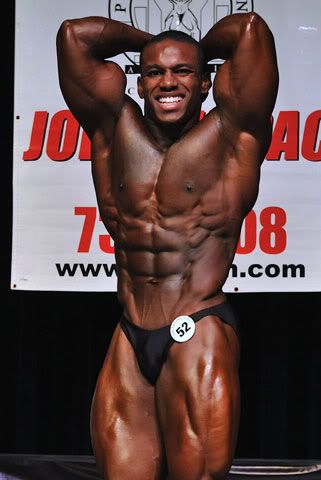
Looking at this pic, it's pretty easy to see why. Way to go Darnell!

Wednesday, January 06, 2010
Think You Can?
We’ve all heard the maxims: If you can see it, you can achieve it. If you want something badly enough – if you just think about it and visualize it – you’ll get what you want. Unfortunately, that’s not how the world works … at least, not most of the time.
As bodybuilders, however, we’re a different breed. We see the lift before we do it, feel the pain that comes from stretching muscle and relish the growth pains afterward. For us, the standard rules don’t apply. We use visualization because it actually works.
But what can you do if you want results and have switched up your program but simply can’t get the results you want? It’s simple: Get inside your own head and switch it up!
A ton of psychological research shows the connection between what you believe happens in the gym and your workout success. More specifically, researchers have shown that the more you feel in control of your workout and that you’re getting results from this control, the better you feel about your workout and the more you feel like you can make changes and overcome potential obstacles and difficulties. And researchers say it’s simple: You have to make your own breaks.
So here’s your FUSION FACTOID: Working out is hard work. It’s demanding but worth it. If you are stuck in a rut and feel like there’s no light at the end of the tunnel – no solution, no way out – change your thinking. Instead of trying to do something you can’t do or continuing to do the same thing without results, do something specifically to give yourself a sense of confidence and control. Do your favorite exercise or a week of your easy routine. This will not only give your body a break from the constant stress of high-intensity, balls-to-the-wall training but also give your mind time to relax and recuperate from continual frustration. So next time, you’ll be physically and mentally charged for victory!
www.fusionbodybuilding.com
Source: Coffee P, Rees T, Haslam SA. Bouncing back from failure: The interactive impact of perceived controllability and stability on self-efficacy beliefs and future task performance. J Sports Sci. 2009 Aug 19:1-8. [Epub ahead of print]
As bodybuilders, however, we’re a different breed. We see the lift before we do it, feel the pain that comes from stretching muscle and relish the growth pains afterward. For us, the standard rules don’t apply. We use visualization because it actually works.
But what can you do if you want results and have switched up your program but simply can’t get the results you want? It’s simple: Get inside your own head and switch it up!
A ton of psychological research shows the connection between what you believe happens in the gym and your workout success. More specifically, researchers have shown that the more you feel in control of your workout and that you’re getting results from this control, the better you feel about your workout and the more you feel like you can make changes and overcome potential obstacles and difficulties. And researchers say it’s simple: You have to make your own breaks.
So here’s your FUSION FACTOID: Working out is hard work. It’s demanding but worth it. If you are stuck in a rut and feel like there’s no light at the end of the tunnel – no solution, no way out – change your thinking. Instead of trying to do something you can’t do or continuing to do the same thing without results, do something specifically to give yourself a sense of confidence and control. Do your favorite exercise or a week of your easy routine. This will not only give your body a break from the constant stress of high-intensity, balls-to-the-wall training but also give your mind time to relax and recuperate from continual frustration. So next time, you’ll be physically and mentally charged for victory!
www.fusionbodybuilding.com
Source: Coffee P, Rees T, Haslam SA. Bouncing back from failure: The interactive impact of perceived controllability and stability on self-efficacy beliefs and future task performance. J Sports Sci. 2009 Aug 19:1-8. [Epub ahead of print]
Monday, January 04, 2010
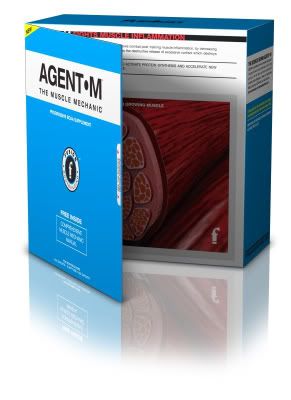
AGENT•M Review.
A 30-day Review of AGENT•M - The Muscle Mechanic: http://forum.bodybuilding.com/showthread.php?t=120726711

Wednesday, December 30, 2009
Christmas Props.
Leigh Mollison, a national-level bodybuilder, sent us some props over Christmas.
"Hi FUSION,
I hope the holidays treated you and your families well. Just sending you a quick note to let you know, I REALLY enjoy FUBAR!! I am the current Ms. Manitoba women's bodybuilding champ and I used your product for my provincials and nationals prep. Thanks and all the best in 2010!!"
- Leigh Mollison

"Hi FUSION,
I hope the holidays treated you and your families well. Just sending you a quick note to let you know, I REALLY enjoy FUBAR!! I am the current Ms. Manitoba women's bodybuilding champ and I used your product for my provincials and nationals prep. Thanks and all the best in 2010!!"
- Leigh Mollison

Wednesday, December 23, 2009

Monday, December 21, 2009
Haven't Got the Heart for Cardio?
Do you hate cardio? Do you have problems doing it? If you’ve always disliked cardio for unknown reasons or because it got you overtrained in a hurry, you may have an underlying cardiovascular problem. It’s sad but true: Some bodybuilders will eventually develop cardiovascular trouble, possibly even including chronic obstructive pulmonary disease (COPD).
We know a lot about exercise’s effects on muscle; eat and train right, and you grow. But exercise’s effects on the cardiovascular system have been less understood – until now.
Researchers examined how much muscular oxidative stress and pulmonary oxidative stress was occurring during exercise for people with prior cardiovascular problems. They used people known to have no cardiovascular problems as a control group.
They had participants work out for 20 minutes at 40 percent of their calculated 1RM and studied their blood and urine before and after exercise. Those with preexisting cardiovascular problems experienced increased pulmonary oxidative stress and overall systemic inflammation after exercise, while healthy subjects didn’t.
So here’s your FUSION FACTOID: Hating cardio because it’s boring isn’t the same as hating it because it gets you overtrained quickly. If you hate it for the latter reason, get a cardiovascular stress test from your doctor. After all, your heart and lungs pump oxygen and nutrients to your muscles so they can grow, so if you’re having cardio trouble, it’s a sure bet that you’re not growing as much as you should either.
www.fusionbodybuilding.com
Source: Mercken EM, Gosker HR, Rutten EP, Wouters EF, Bast A, Hageman GJ, Schols AM. Systemic and pulmonary oxidative stress after single-leg exercise in COPD. Chest. 2009 August 20. [Epub ahead of print]
We know a lot about exercise’s effects on muscle; eat and train right, and you grow. But exercise’s effects on the cardiovascular system have been less understood – until now.
Researchers examined how much muscular oxidative stress and pulmonary oxidative stress was occurring during exercise for people with prior cardiovascular problems. They used people known to have no cardiovascular problems as a control group.
They had participants work out for 20 minutes at 40 percent of their calculated 1RM and studied their blood and urine before and after exercise. Those with preexisting cardiovascular problems experienced increased pulmonary oxidative stress and overall systemic inflammation after exercise, while healthy subjects didn’t.
So here’s your FUSION FACTOID: Hating cardio because it’s boring isn’t the same as hating it because it gets you overtrained quickly. If you hate it for the latter reason, get a cardiovascular stress test from your doctor. After all, your heart and lungs pump oxygen and nutrients to your muscles so they can grow, so if you’re having cardio trouble, it’s a sure bet that you’re not growing as much as you should either.
www.fusionbodybuilding.com
Source: Mercken EM, Gosker HR, Rutten EP, Wouters EF, Bast A, Hageman GJ, Schols AM. Systemic and pulmonary oxidative stress after single-leg exercise in COPD. Chest. 2009 August 20. [Epub ahead of print]
Tuesday, December 15, 2009
FUSION Awards Supplement Contract.
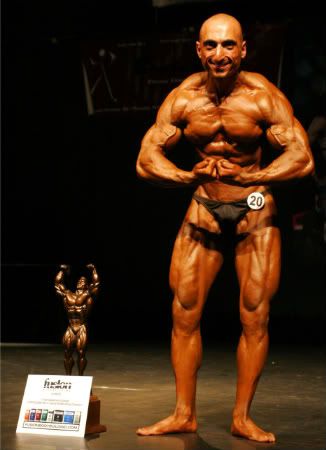
We’d like to send a huge shout-out to Zaid Adamo for claiming the overall title at this year’s NLABBA Championships. He was able to come in super ripped and edged out a very competitive field. As a result he was awarded at one year supplement contract with FUSION BODYBUILDING. Great work Zaid…see you on the national stage!

Monday, December 14, 2009
V.I.P. Update.
We have been getting a lot of great feedback on our V.I.P. site. The how-to posing and training sections have received a lot of praise. However, here at FUSION BODYBUILDING we are more concerned with what you don't like, what we're doing wrong...because that makes us better. One point of mention was the fact it required between 8 and 10 proof-of-purchases to receive FUSION gear. The feeling was that's way too many...that we were expecting too much. So...after some quick decision making, we've decided to chop that number in half. You'll now only need to submit 4-5proof-of-purchases for your choice of hat, skully or t-shirt.
FUSION users know what's right and from time to time we need to be told. So, please keep your feedback coming and we'll be sure to keep getting better.
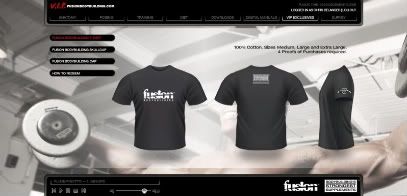
FUSION users know what's right and from time to time we need to be told. So, please keep your feedback coming and we'll be sure to keep getting better.

Subscribe to:
Posts (Atom)

